Why Every Company in Qatar Needs a Dedicated Staff Transportation Service
Running a business in Qatar means managing a workforce that often spans multiple nationalities, shift patterns, and locations across Doha. Getting your people to work — on time, every day, safely — is not a small operational task. Yet many companies still leave it entirely to individual employees, absorbing the hidden costs in late arrivals, fatigue, and turnover without ever connecting those problems to transport.
That's changing. HR managers and operations teams across Qatar are increasingly recognising that a dedicated staff transportation service isn't a perk — it's a business asset. Here's why.
“Dedicated staff transport is a corporate strategy that directly influences worker retention, punctuality, and operational security.”
— Doha Storm Logistics Analyst
The Real Cost of Letting Employees Sort Their Own Transport
On the surface, not providing transport seems like the lower-cost option. In practice, the opposite is often true:
Absenteeism & Late Arrivals
Employees relying on personal vehicles, taxis, or informal arrangements are vulnerable to traffic delays, vehicle breakdowns, and rising fuel costs. Even one late arrival per shift in a large workforce creates a ripple effect on productivity.
Driver Fatigue
Workers arriving after long commutes — particularly those on early morning or night shifts — are more fatigued before the working day even begins. For industries involving manual labour and construction operations, this is a direct safety risk.
Staff Turnover
Commute difficulty is consistently cited as one of the top reasons employees leave jobs. In Qatar's competitive labour market, companies that remove this friction retain people longer — reducing recruitment and onboarding costs.
Informal Transport Risks
When employees organise their own shared rides or rely on unlicensed transport, companies carry indirect liability for anything that goes wrong. A formal, contracted transport service clarifies responsibility and protects the business.
The costs of not having a structured transport solution are real. They're just distributed quietly across HR budgets, productivity losses, and accident reports rather than appearing as a line item.
How Dedicated Staff Transportation Actually Works
A professional staff transport service is more organised than most companies expect. Here's the typical structure:
- Route Planning: The transport provider works with your HR or operations team to map out pickup points based on where your employees live — grouping nearby locations into efficient routes that minimise journey time and maximise coverage.
- Fixed Schedules: Buses or minibuses operate on confirmed timetables aligned with your shift patterns. Whether you run a single 9-to-5 shift or a 24/7 operation with rotating crews, routes are designed around your schedule — not the other way around.
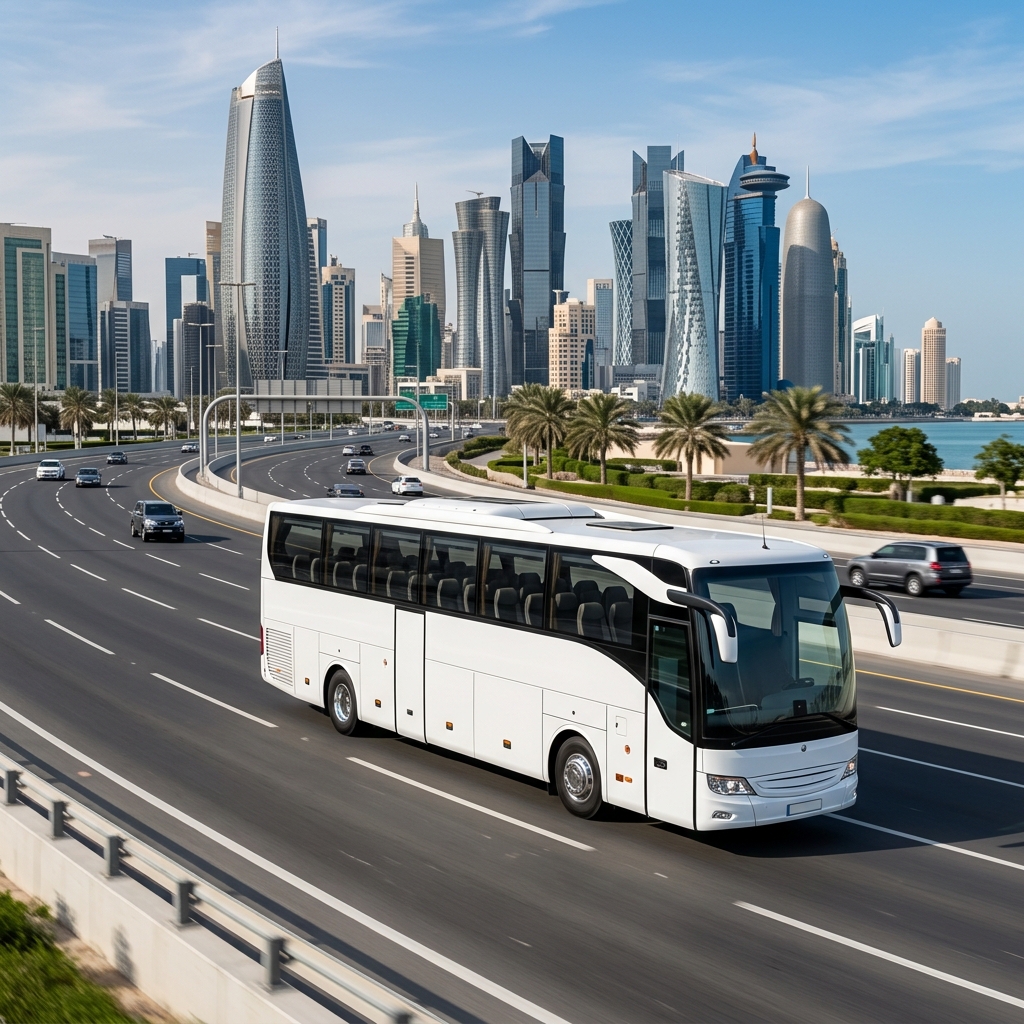
- Fleet Assignment: Depending on your headcount and shift size, the right vehicle is assigned — from a 15-seat minibus for a small team to a 66-seat coach for large-scale workforce deployments.
- Driver Coordination: Professional drivers familiar with Doha's roads handle navigation, traffic management, and communication. If a vehicle is delayed, your designated contact is informed immediately.
- Ongoing Adjustment: As your workforce or site locations change, routes are updated. A good provider works with you continuously, not just at sign-up.
How Shift-Based Workforce Transport Works in Practice
Shift-based operations — common in Qatar's construction, healthcare, hospitality, and facilities management sectors — present particular transport challenges. Staff start and finish at unconventional hours, sometimes in locations far from central Doha, often in areas with limited public transport.
A dedicated pickup and drop service addresses this directly:
- Early morning shifts (5am–7am starts): Buses run before public transport is operational, collecting workers from designated pickup points and delivering them to site on time.
- Night shifts (finishing 10pm–2am): Workers aren't left to find their own way home after dark. Pre-arranged drop routes ensure safe, reliable return journeys.
- Split shifts: Multiple vehicle runs can be coordinated across a single day, with different route configurations for morning and evening crews.
- Emergency coverage: Reliable providers maintain backup vehicles and substitute drivers so that a breakdown or driver absence never translates into a missed shift.
Fleet Options: Matching the Right Vehicle to Your Needs
One of the advantages of working with an established transport provider like Doha Storm is access to a diverse fleet. There's no need to overspend on a 66-seat bus for a team of 20, nor is a 15-seat minibus appropriate for a 50-person night shift.
| Workforce Size | Recommended Vehicle Type |
|---|---|
| 10–15 employees | 15-seat Minibus (Executive / Standard) |
| 20–26 employees | 23 or 26-seat Minibus |
| 25–30 employees | 30-seat Minibus |
| 50–66 employees | 66-seat Full Coach |
| Mixed loads / Logistics crews | One-ton or three-ton pickup (for equipment + small teams) |
Many companies operate multiple vehicle types simultaneously — a coach for the main shift and a minibus for supervisory or technical staff travelling on a different schedule. A good provider will help you configure the right combination based on your actual operational needs rather than offering a one-size-fits-all package.
Compliance and Safety Standards You Should Expect
Qatar takes transport safety seriously. Vehicles used for workforce transportation must meet standards set by the Ministry of Interior and the relevant traffic authority. Drivers must hold appropriate Qatar licences and, depending on the route and passenger type, may require additional certifications.
Compliance and Safety Standards Checklist
- Valid vehicle registrations
- Full commercial passenger insurance
- Class-appropriate driver licenses
- Real-time GPS tracking
- Mandatory heavy-duty AC system
- Documented emergency procedures
- Passenger log & accountability records
- Route adherence tracking
- Safe speed limiter installation
- Backup fleet availability
Staff Transport vs. Labour Transport: What's the Difference?
- Staff transport typically refers to the movement of office employees, corporate teams, or professional workers between residential areas and business premises. Routes tend to be more spread across the city, vehicles may be smaller, and scheduling aligns with standard working hours.
- Labour transport refers to the movement of blue-collar or manual workers — construction crews, factory staff, hospitality workers — often in larger numbers, to and from sites that may be industrial zones, project locations, or remote areas outside central Doha.
Reliable Workforce Transport Since 2005
At Doha Storm, we have been providing labour and staff transport to construction sites, hospitality groups, and corporate offices across Qatar since 2005. Our large-capacity buses — including 66-seat coaches — are specifically suited to the scale of workforce movements common in the sector. Routes are planned with shift timings in mind, and backup vehicle arrangements ensure that a single breakdown never halts an entire crew's transport.
Frequently Asked Questions
What is staff transportation in Qatar?
Staff transportation in Qatar refers to organised bus or minibus services provided by companies to move employees between their homes and workplace. It is common across corporate, construction, healthcare, and hospitality sectors.
Is it mandatory for companies in Qatar to provide transport?
While not universally mandatory for all sectors, certain industries and company types are required or strongly expected to provide transport under Qatar's labour regulations — particularly for workers housed in company accommodation or working in remote locations. It is advisable to verify the current requirements for your sector with a qualified legal adviser.
How much does staff transport cost in Qatar?
Cost depends on the number of employees, number of routes, vehicle type, and frequency of service. Doha Storm provides customised quotes based on your specific operational requirements. Contact them directly for accurate pricing.
What vehicle sizes are available for staff transport?
Doha Storm operates 15, 23, 26, and 30-seat minibuses as well as 66-seat full coaches and one-ton and three-ton pickup trucks — covering everything from small corporate teams to large construction crews.
Can a transport provider handle multiple shifts?
Yes. Reputable providers like Doha Storm can configure separate routes and schedules for morning, afternoon, and night shifts, with the flexibility to adjust as your workforce needs change.